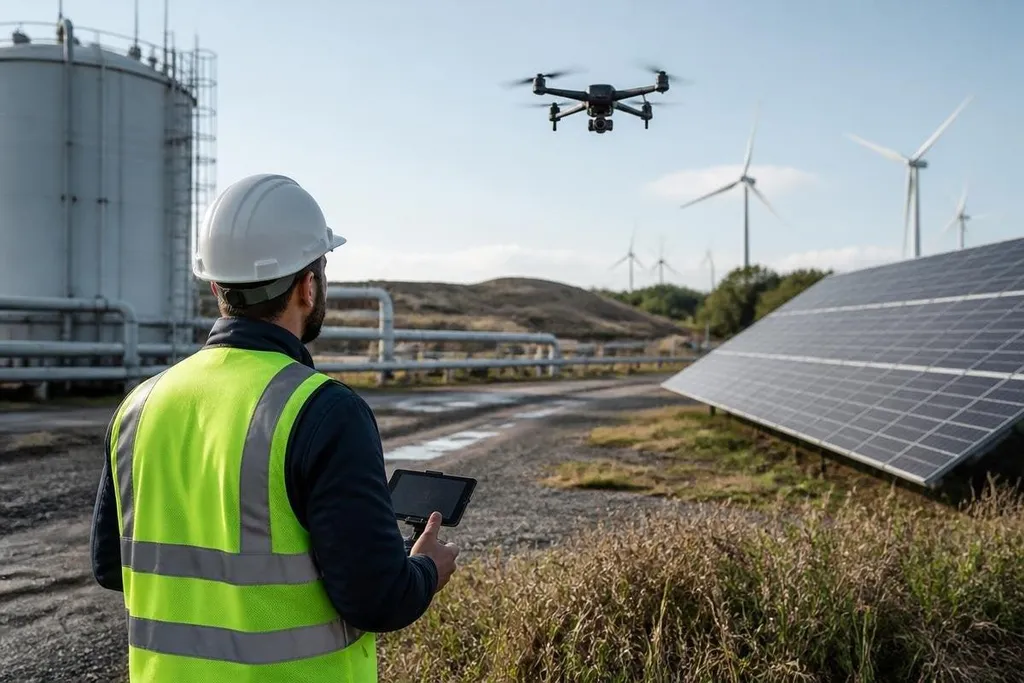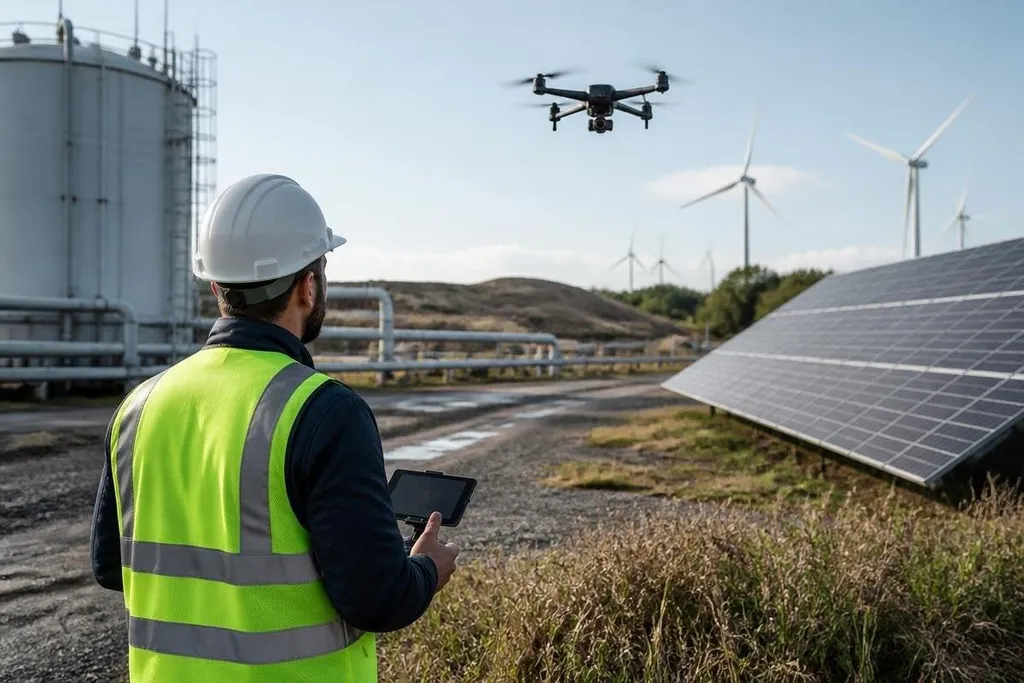
A robot with a methane sensor can inspect pipes, tanks, and landfill sites without sending a person into every hard-to-reach space. Another can use a thermal camera to find a failing solar panel before it lowers the output of an entire array. These jobs can cut waste, but robots won’t solve climate change on their own.
- Robots can find leaks, faults, and crop stress with fewer site visits.
- Automation can sort more material from mixed waste streams.
- The robot’s own power use and manufacture still count.
Find problems before they waste energy
Inspection is one of the clearest uses. A drone can scan power lines, wind turbine blades, and solar panels with cameras, thermal sensors, or LiDAR, which measures distance with laser pulses. The data can point a technician to one damaged part instead of sending a crew to inspect every section by hand.
That matters when access is slow or risky. A wind turbine blade may sit high above the ground, while a solar farm can cover a large area. A robot that finds a cracked blade or a hot electrical connection can help keep equipment producing power for longer.
The limits are plain. A sensor can find a fault, but a person may still need to approve the repair, bring the right part, and shut down the equipment safely. Poor weather, dust, glare, and weak network coverage can also reduce the quality of the inspection.
Cut methane and other leaks
Methane traps more heat in the atmosphere than carbon dioxide over a shorter period. Robots can help locate leaks from gas equipment, wastewater sites, and landfills by carrying methane sensors close to the source.
A mobile robot can repeat the same route and record where readings change. That makes it easier to check a repair later. An aerial robot can cover ground faster, while a tracked robot can work near pipes or waste where a person may face greater exposure.
The sensor reading still needs context. Wind can carry methane away from its source, and a high reading does not show how much gas is escaping over a full day. The useful system combines the sensor data with a site map and a repair plan.
Robot24.comis a robotics news platform, so its coverage of inspection machines, autonomous systems, and climate-related automation helps connect laboratory work with the jobs these robots may perform.
Use less material in farms and factories
Agricultural robots can inspect individual plants, remove weeds, or apply water and chemicals where they are needed. A camera can spot color changes in leaves, while a small arm or sprayer works on a narrow part of a field.
That can reduce wasted inputs, though the result depends on crop type, soil, weather, and the robot’s accuracy.
Factories can use robotic arms to sort parts, cut material, and repeat measurements. Better control can reduce scrap. The climate benefit depends on what happens next: a factory that makes more unwanted products with less scrap may still use more energy overall.
Recycling has a similar limit. A vision system and robotic gripper can separate objects from a moving belt, but dirty packaging, tangled materials, and mixed plastics remain hard to identify. Better sorting helps only when a buyer can use the recovered material.
Count the robot’s own cost
Every climate claim needs a full energy check. Building batteries, motors, sensors, computers, and steel uses materials and electricity. Charging the robot also creates emissions when the power comes from fossil fuels.
A small inspection robot that replaces repeated truck trips may repay that cost through lower fuel use. A heavy autonomous vehicle that runs all day for a task a person could finish in one short visit may not. The answer depends on the route, battery life, repair cycle, and power source.
I’d back robots for repeated inspection, leak detection, and precise field work before buying them for vague climate promises.
A practical buying checklist
Before funding a climate-focused robot, check:
- The measured task: name the leak, fault, waste stream, or crop problem.
- The baseline: record the fuel, electricity, travel, and labor used today.
- The sensor proof: ask what the camera, LiDAR, or gas sensor can detect in field conditions.
- The repair path: assign a person, part supply, and safe shutdown process.
- The full footprint: include manufacture, charging, maintenance, and disposal.
The best next step is a small trial with a fixed route and a before-and-after energy record. If the robot cuts wasted material or travel without adding more power use than it saves, the climate case has something solid behind it.